How to Prevent Shoe Bite from New Sandals
A new pair of sandals can look perfect in the store and still become painful within an hour of wearing it outside. The strap starts rubbing your little toe, the back edge irritates your heel, or a stiff section leaves the skin red and sore. What was supposed to be a comfortable new purchase suddenly becomes a pair you hesitate to wear again.
This problem is particularly common in India, where sandals are worn for long hours in warm and humid weather. Walking to the metro, shopping in a market, attending a wedding or simply spending an entire day outside can mean thousands of repeated steps. Add sweat, heat, stiff new straps or an imperfect fit, and the chances of developing shoe bite or a friction blister increase.
Fortunately, you do not have to wait until painful blisters appear. The best strategy is to identify rubbing early, make sure the sandals fit correctly and gradually get accustomed to new footwear. Here is how to prevent shoe bite from new sandals while keeping your feet comfortable.
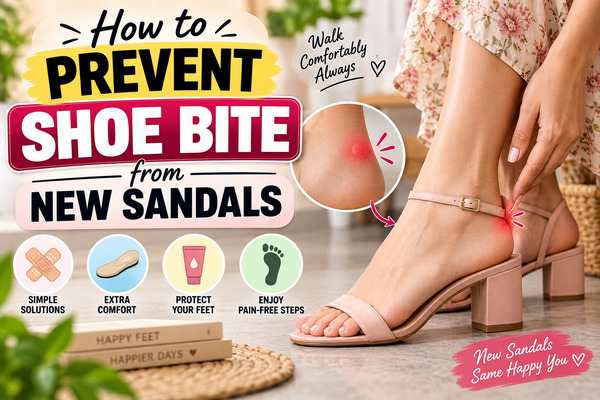
Why Do New Sandals Cause Shoe Bite?
Shoe bite usually develops when repeated movement between your foot and footwear irritates the skin. New sandals can be particularly troublesome because straps, edges and footbeds may initially feel firmer.
Common reasons include:
- Sandals that are too tight or too loose
- Stiff straps rubbing against the skin
- Feet sliding forward while walking
- Rough seams or decorative elements touching the foot
- Sweaty or damp feet
- Wearing new sandals continuously for several hours
- Incorrect sandal shape for your foot
- Pressure around the toes, heel or ankle
Both excessively tight and loose footwear can cause problems. Tight sandals create pressure, while oversized sandals may allow unnecessary foot movement.
1. Check the Fit Before You Buy
Preventing shoe bite begins in the shop or before removing the tags from an online purchase.
Your heel should sit comfortably within the sandal rather than hanging over the back. Similarly, your toes should not extend beyond the front edge.
Check the width as well. If the sides of your feet are being squeezed or hanging significantly over the sole, consider another size, width or style.
Walk around for several minutes when trying sandals. Pay attention to:
- Straps pressing against your toes
- Rubbing around the heel
- Your foot sliding forward
- Tightness across the widest part of your foot
- Toe-post discomfort in flip-flop-style sandals
- Buckles pressing directly against the skin
Do not buy painfully tight sandals simply because you expect them to stretch later.
2. Wear New Sandals at Home First
One of the easiest ways to prevent shoe bite is to avoid wearing brand-new sandals for an entire day immediately.
Test them indoors on a clean floor for short periods. Start with approximately 20–30 minutes and gradually increase the time if they remain comfortable.
This gives you an opportunity to identify pressure points before they become blisters. It also keeps the footwear clean if you discover that the fit is unsuitable and need to exchange it.
If redness repeatedly appears in the same location after a short wear, take it seriously. Do not assume you need to tolerate pain to “break in” the sandals.
3. Protect Known Friction Areas Before Going Out
If you know that a particular strap tends to rub against your heel or little toe, protect the area before irritation starts.
Depending on the location, you can consider:
- Soft adhesive bandages
- Moleskin
- Blister-prevention patches
- Suitable foot tape
- Gel cushions designed for footwear
Place the protection over the area likely to experience friction rather than waiting until the skin is already damaged.
Make sure any pad or tape lies smoothly. Wrinkled or bulky material can itself create additional pressure.
4. Keep Your Feet as Dry as Possible
Hot Indian summers and humid monsoon weather can make sandal-related irritation worse. Moist skin can become more vulnerable to repeated friction.
Wash and dry your feet thoroughly before wearing sandals. Pay particular attention to the spaces between the toes.
If your feet sweat heavily, taking short breaks and drying them when practical can help. Some people also use a suitable foot powder to manage moisture.
Avoid putting damp feet directly into new sandals, particularly before a long walk.
If your sandals themselves become wet during the monsoon, allow them to dry properly according to the manufacturer’s care instructions before wearing them again.
5. Reduce Friction at Problem Spots
For areas that repeatedly rub, a small amount of petroleum jelly or an appropriate anti-chafing product may help reduce friction.
Common sandal friction points include:
- Back of the heel
- Sides of the feet
- Little toe
- Top of the foot beneath straps
- Areas around ankle straps
Apply only where necessary, and remember that products can affect certain footwear materials or make your feet feel slippery.
If your foot begins sliding excessively inside the sandal, stop using the product with that pair. Stability is just as important as reducing friction.
6. Adjust Buckles and Straps Properly
Adjustable sandals give you an advantage because you can change how securely they hold your foot.
A strap should generally be secure enough to keep your foot stable without digging into the skin. If it is excessively loose, your foot may slide and repeatedly move against the strap.
When trying a new pair, experiment with the available buckle positions rather than automatically using the same hole on both feet. Feet can differ slightly in size.
Also check where the buckle itself sits. A metal buckle pressing directly against a bony part of your foot can become uncomfortable during extended wear.
7. Be Careful with DIY Softening Tricks
You may come across home remedies recommending hair dryers, soaking sandals in water, applying oils or aggressively bending straps to soften them quickly.
These methods can damage footwear.
Heat may affect adhesives and synthetic materials, while water can alter certain leather finishes, colours and construction. Oils and creams not designed for footwear may stain the material.
Instead, allow suitable sandals to become more flexible gradually through short periods of normal wear.
For expensive leather sandals, use only care products recommended for that type of leather or ask a reputable footwear professional for advice.
8. Choose the Right Sandals for Long Walking
Not every fashionable sandal is designed for an entire day of walking.
If you are sightseeing, shopping, travelling or commuting, look beyond appearance. Consider sandals with a secure fit, appropriate cushioning and a sole that provides suitable grip.
Very thin soles may offer little protection from hard or uneven surfaces, while poorly positioned straps can create repeated pressure.
For longer walks, look for features such as:
- Stable footbed
- Secure heel or ankle strap
- Comfortable toe space
- Appropriate cushioning
- Flexible but supportive construction
- Good outsole grip
Keep highly decorative or delicate sandals for occasions where you expect less walking.
9. Treat a Hot Spot Before It Becomes a Blister
A warm, red or tender patch of skin can be an early warning that a blister is developing.
Do not ignore it.
If you notice discomfort while walking, stop when possible and inspect your foot. Cover the irritated area with an appropriate blister dressing or protective bandage and reduce further friction.
Continuing to walk for hours while the same strap repeatedly irritates the area can turn mild redness into a painful blister.
Carrying a couple of small adhesive bandages in your handbag can be surprisingly useful when wearing new sandals.
10. What to Do If You Already Have Shoe Bite
If a blister has already developed, avoid further rubbing from the sandals that caused it until the area has healed.
For a small intact blister:
- Keep the area clean.
- Protect it with an appropriate dressing.
- Avoid unnecessary pressure or friction.
- Do not peel away the skin covering the blister.
- Change footwear temporarily if necessary.
Avoid casually popping an intact blister. The skin covering it helps protect the tissue underneath.
If the blister breaks naturally, gently keep the area clean and protected while it heals.
Seek medical advice if you notice increasing redness, warmth, swelling, pus or worsening pain, as these can indicate infection. People with diabetes, poor circulation or reduced sensation in their feet should be particularly careful with any foot wound and seek appropriate professional advice.
11. Know When the Sandals Are Simply Wrong for Your Feet
Sometimes the solution is not another blister patch or home remedy—it is changing the footwear.
Consider returning or exchanging new sandals if:
- Your toes are painfully compressed.
- The straps consistently dig into your skin.
- Your foot hangs beyond the sole.
- Your heel repeatedly slides excessively.
- A hard decorative element presses into your foot.
- You experience numbness or significant pain.
- The same area becomes irritated every time you wear them.
Foot shapes differ, so a sandal that feels perfect to someone else may simply not suit your feet.
FAQs
1. How can I prevent shoe bite before wearing new sandals to a wedding?
Wear the sandals indoors several times before the event and identify any areas that rub. Protect known friction spots with an appropriate blister patch or soft bandage. For a long Indian wedding, carrying comfortable backup flats or sandals is also useful.
2. Can petroleum jelly prevent shoe bite?
A small amount applied to friction-prone skin may help reduce rubbing for some people. However, avoid using so much that your foot becomes slippery inside the sandal, and be careful because some products may affect certain footwear materials.
3. Should I pop a blister caused by sandals?
Small intact blisters are generally best left unbroken and protected from further friction. If a blister is unusually large, very painful, infected-looking or you have a condition that affects foot healing, seek medical advice rather than treating it aggressively yourself.
4. Why do I get shoe bites even when my sandals are the correct size?
Size is only one factor. The width, strap position, foot shape, material stiffness, moisture and movement inside the sandal can all contribute. If one particular style repeatedly irritates the same area despite being the correct numerical size, its shape or construction may not suit your foot.